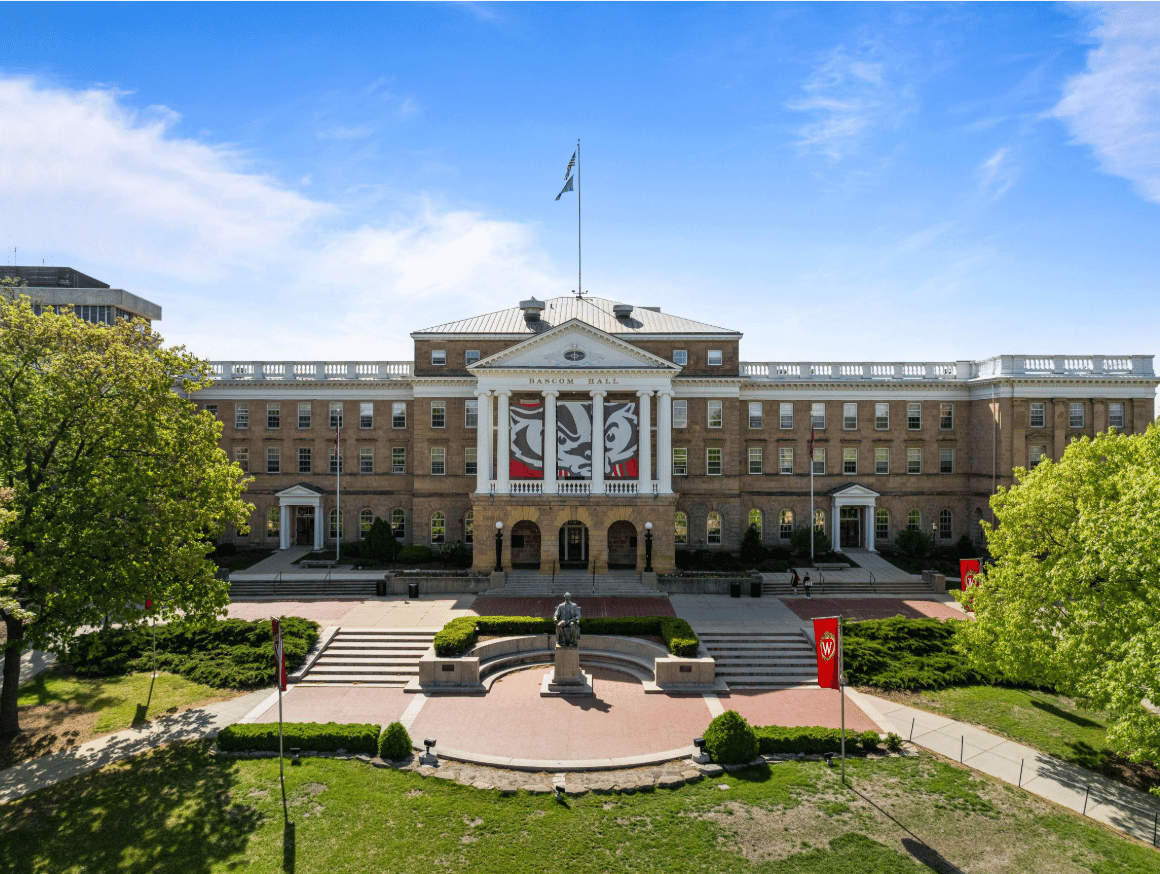
So… your kid is heading off to college at University of Wisconsin–Madison or Edgewood College this fall.
And somewhere between move-in day excitement, Target dorm runs, and emotional family photos, there is a quieter conversation happening that most parents don’t fully realize they’ve stepped into yet:
Housing in Madison is not just housing. It’s a system. And once you’re in it, you’re playing by its timeline whether you meant to or not.
The Madison college rental market has its own rhythm — almost like a parallel academic calendar that nobody officially hands you, but everyone is expected to follow anyway.
And if you don’t know it exists yet, you usually find out the same way most families do: your student tells you they “need to sign a lease soon.”
Soon, in Madison terms, means October.
While most freshmen are still figuring out where their lecture hall is and which dining hall has the least chaotic lunch rush, they are also being pulled into one of the most uniquely intense traditions in this city: signing a legally binding 12-month lease for the following school year after knowing their roommates for about six weeks.
Sometimes less.
It’s fast. It’s emotional. And it’s driven by a very real fear of “everything good will be gone if we don’t decide right now.”
Which leads us directly into the part most parents don’t see until they’re already deep in it.
Madison Rentals Are Expensive… and Often Not What Parents Picture
By the time most families start looking at off-campus housing near campus or downtown Madison, there’s usually a quiet expectation that things will be “reasonable college pricing.”
What they actually find is a market where pricing is driven less by square footage and more by timing, location, and proximity to campus life.
And most importantly, by the student leasing cycle itself.
Here’s what the actual monthly rent landscape looks like in Madison right now for buildings actively marketing toward students:
|
Unit Type |
Low-End “Older / Basic” Buildings |
Average Market Rent |
High-End “Student Housing” / Newer Builds |
|
Studio |
~$1,150–$1,250 |
~$1,250–$1,400 |
~$1,400–$1,800+ |
|
1 Bedroom |
~$1,450–$1,550 |
~$1,550–$1,650 |
~$1,700–$2,200+ |
|
2 Bedroom |
~$1,800–$2,000 |
~$1,900–$2,100 |
~$2,200–$2,800+ |
And what matters here isn’t just the pricing — it’s what category families are usually shown first.
Most “student housing” buildings marketed to parents are sitting in that upper tier.
They’re the glossy ones.
Rooftop decks. Fitness centers. Study lounges that look like co-working spaces. Coffee bars that feel designed specifically to make you forget your child will still be eating ramen at midnight on a Tuesday.
And to be fair, those amenities are part of the appeal.
But they also set the baseline for pricing in a way that pushes even average housing higher than most families expect.
On the other end, older buildings can sometimes offer lower rent, but that usually comes with a very different reality: aging infrastructure, fewer amenities, and the kind of maintenance quirks that only fully reveal themselves once Wisconsin winter decides to test the entire building system at once.
And this is where the first real disconnect usually happens.
Because from the outside, it looks like you’re comparing apartments.
In reality, you’re stepping into a market that operates on a synchronized student timeline — where thousands of leases get signed in the same narrow window every year.
Which brings us to what happens next.
The Hidden Stress of Student Renting
And yet, every summer and at the end of each semester, the same scene plays out in Madison:
a flood of students (and often their parents) suddenly scrambling to find subletters for apartments they are no longer sure they can fully commit to.
It doesn’t matter why.
Sometimes it’s study abroad.
Sometimes it’s transferring.
Sometimes it’s a sudden change in plans.
And sometimes it’s the classic situation where a friend group (formed approximately six weeks and two campus parties ago) completely implodes right after everyone signed a 12-month lease together.
Suddenly, housing becomes something very different than what it felt like in October.
It becomes coordination. Timing. Negotiation. And a surprising amount of emotional labor for something that started as “let’s just get a place together near campus.”
The Madison rental market is a high-stress, high-stakes system, not because anyone is doing anything wrong, but because the structure itself leaves very little flexibility once decisions are made.
And layered on top of all of this is the reality that University of Wisconsin–Madison does not require students to live on campus beyond freshman year. Upperclassmen housing exists, but it is limited, lottery-based, and not guaranteed due to enrollment pressures and demand that consistently exceeds supply.
So what you end up with is a system where 18- and 19-year-olds are making year-long housing commitments in the fall… for versions of their lives that don’t fully exist yet.
High stress. High stakes. Very little margin for error.
The Part That Makes People Pause: 4-Year Renting vs Buying Side-by-Side
At a certain point, most parents stop thinking in monthly rent terms and start thinking in total cost over time.
Because four years sounds manageable in small increments.
It feels very different when you zoom out.
Here’s what that actually looks like in Madison:
|
Scenario |
Monthly Cost (Avg) |
4-Year Total Cash Outflow |
End Result After 4 Years |
|
Renting a 2BR student apartment (shared) |
~$1,900–$2,100 |
~$68,400–$75,600 |
$0 equity, no asset, rent fully spent |
|
Renting a 1BR or studio (solo) |
~$1,400–$1,650 |
~$50,400–$59,400 |
$0 equity, no asset, rent fully spent |
|
Buying a $325K–$450K condo near campus |
~$1,800–$2,600 (all-in estimate) |
~$86,000–$125,000 |
Potential equity + resale value after graduation |
Now, on paper, renting can still look simpler — and for many families, it absolutely is.
But what the renting column doesn’t show is what disappears at the end of four years:
no asset, no equity, no residual value, no financial continuation.
Meanwhile, in a purchase scenario, a portion of those monthly payments is going toward principal, and the property itself becomes something that can potentially:
-
appreciate over time
-
generate rental income after graduation
-
or be sold with equity return depending on market conditions
And this is where the decision often shifts from “monthly affordability” to “long-term structure.”
Because suddenly the question is no longer just:
“What does this cost per month?”
It becomes:
“Do I want to spend four years paying for housing… or four years building into something that still exists afterward?”
Of course, buying is not the right fit for everyone. It introduces responsibility, market exposure, and management considerations that renting avoids entirely.
But in a city like Madison, where demand is consistent, location matters heavily, and student housing cycles are predictable, the comparison becomes harder to ignore once you see it laid out like this.
Final Thoughts
College housing in Madison is often treated like a background detail in the larger “sending your kid to school” experience.
But in reality, it functions like its own decision track — one that starts earlier, moves faster, and carries more financial weight than most families anticipate.
For some, renting will always be the simplest and cleanest solution.
But for others, the traditional four-year lease cycle starts to feel less like a rite of passage and more like a system worth stepping back from.
At the very least, it’s worth running the numbers before that first lease gets signed in October.
And if you’re trying to figure out whether buying near campus could actually make sense for your student in Madison, I’m always happy to walk through it — the numbers, the neighborhoods, and the reality behind both options.
By: Amaya Boman