If you own a historic Willy Street home, you have probably asked yourself a tricky question: how do you make it feel fresher, brighter, and more functional without stripping away the details that made you love it in the first place? In Marquette, that balance matters because the homes along and around Williamson Street are part of what gives the neighborhood its identity. The good news is that you do not have to choose between charm and livability. With the right updates, you can preserve character, improve day-to-day function, and make smart choices for resale. Let’s dive in.
Why Willy Street Homes Feel So Distinctive
Marquette is shaped by the Williamson Street corridor, which the City of Madison describes as a pedestrian-oriented main street whose heritage should be preserved and strengthened. That context matters when you think about updates, especially on the exterior. In this part of Madison, your home is not just a structure. It is part of a streetscape people recognize and value.
Many of the area’s most memorable homes reflect Craftsman-era design, especially in the Marquette Bungalows Historic District, which began development in 1924. Common features include front porches, dormers, exposed rafters, bay windows, and compact one-and-a-half-story forms with varied details. Those elements are often the first things buyers notice from the sidewalk and in listing photos.
That is why the most important question is not, “What can I change?” It is, “What gives this house its identity?” In many historic homes, that means porches, rooflines, windows, trim, wood floors, and the original proportions of the rooms.
Start With Preservation, Not Reinvention
A good rule for historic homes is simple: repair and refresh first. The National Park Service rehabilitation standards emphasize keeping historic character, preserving distinctive materials and craftsmanship, and avoiding the removal or major alteration of defining features and spaces. In practical terms, that usually means you should work with what is already strong before reaching for a major redesign.
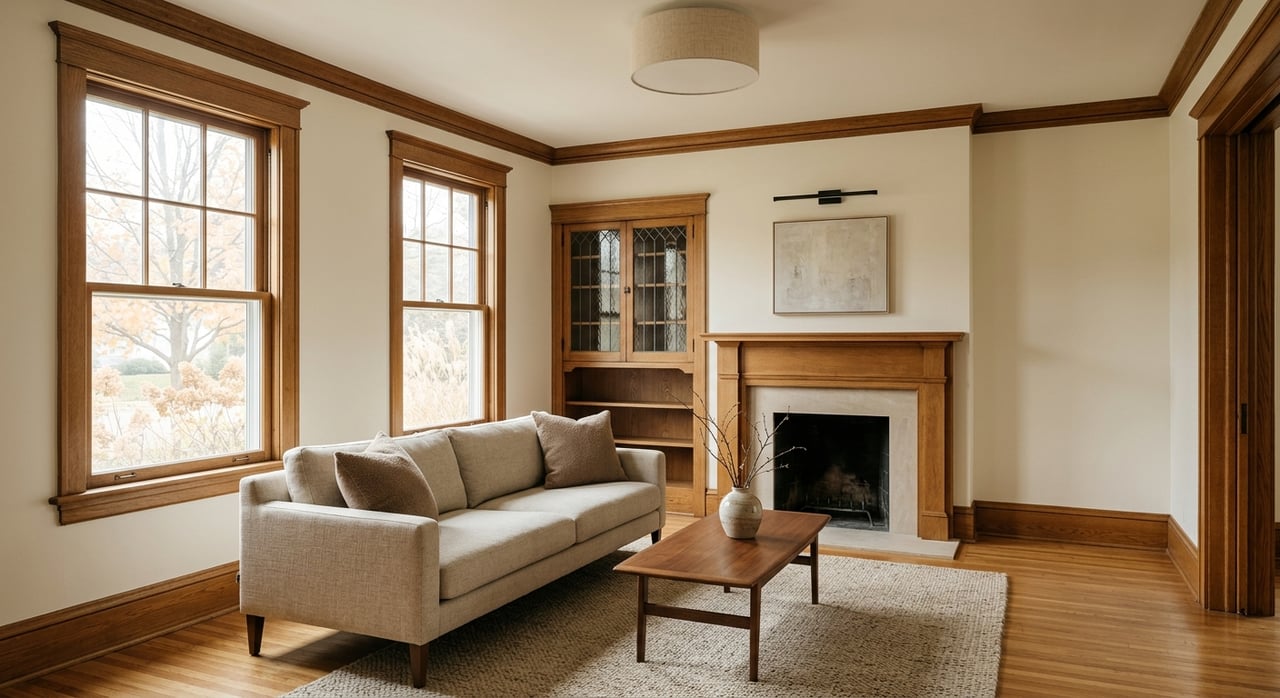
For many Marquette homeowners, the best results come from updates that improve comfort and appearance while keeping the home’s visual language intact. That might mean refinishing wood floors, restoring trim, improving paint colors, updating lighting, or repairing worn features instead of replacing them. These choices help the house feel cared for rather than remade.
This approach also tends to align with what buyers respond to. If the home is already functional, a clean, bright, well-edited presentation often goes farther than a full gut renovation.
Focus on What Buyers Notice Most
Today’s buyers want a home that feels easy to imagine living in. According to the National Association of Realtors’ 2025 Profile of Home Staging, 83% of buyers’ agents said staging makes it easier for buyers to visualize a property as a future home, and 60% said staging affects most buyers most of the time. That matters even more in older homes, where character can either shine or get lost depending on presentation.
The same research found that the living room, primary bedroom, and kitchen are the most important spaces to stage. It also showed that photos, physical staging, video, and virtual tours all play a meaningful role in how buyers respond. For a historic Willy Street home, that means your original charm needs to read clearly both in person and online.
Before you think about tearing out walls or starting a major remodel, ask whether a lighter, simpler improvement plan could do the job. Fresh paint, reduced visual clutter, stronger lighting, and better furniture placement can often make an older home feel more spacious and inviting without changing its bones.
Update the Kitchen Without Erasing the House
Kitchen upgrades continue to show strong buyer demand, and a minor kitchen remodel ranked among the top resale projects in the 2025 Cost vs. Value report. That does not mean every older kitchen should be gutted. In a historic Marquette home, the more resale-friendly move is often to improve function and brightness while keeping the layout cues that make the house feel authentic.
If your kitchen works reasonably well, focus on updates that support the style of the home instead of fighting it. Think cleaner finishes, better task lighting, refreshed surfaces, and a more edited look. The goal is to help the space feel crisp and usable while still belonging to the rest of the house.
The National Park Service advises against removing principal walls or making changes that diminish a building’s historic character. So if you are tempted to fully open the kitchen into surrounding rooms, pause first. A smaller, more targeted improvement may solve the real problem without sacrificing the room relationships that give the home its charm.
Refresh Bathrooms With Restraint
Bathrooms are another area where buyer demand has been rising. In smaller historic homes, though, a bathroom does not always need a bigger footprint to feel better. Often, the biggest visual and functional payoff comes from a careful refresh.
That can mean improved lighting, updated fixtures, cleaner finishes, and a layout that feels deliberate rather than cramped. Instead of chasing a trend-heavy remodel, focus on making the room feel brighter, more polished, and easier to use. In a home with strong original character, a calm and simple bath update often feels more consistent than a dramatic redesign.
This is one of those places where subtlety usually wins. Buyers tend to appreciate spaces that feel fresh and move-in ready, especially when they still fit the age and style of the house.
Treat Windows as Character Features
Windows are one of the defining elements of an older home, and they deserve special care. The National Park Service recommends repairing deteriorated historic features rather than replacing them when possible. It also notes that if replacement is necessary, the new window should match the old one in design, color, texture, and other visual qualities, and where possible materials.
Just as important, energy performance alone is not considered a reason to replace historic windows. Repair options can include weatherstripping and other improvements that help performance without changing the look of the house. That is a useful reminder if you are weighing comfort upgrades against curb appeal.
For Madison properties with local historic designation, exterior changes require Landmarks Commission approval and a Certificate of Approval before a building permit is filed. The city also provides a window replacement request form. If your home is designated, it is smart to understand that review process before starting exterior work.
Be Careful With Floor Plan Changes
One of the easiest ways to lose historic charm is to overcorrect the layout. Older homes often have smaller rooms, defined spaces, and original circulation patterns that feel different from newer construction. Those features can be part of the appeal, even when they require some thoughtful adaptation.
The National Park Service recommends preserving floor plans, room relationships, trim, fireplaces, windows, doors, and transoms that define historic character. It specifically cautions against altering principal walls, inserting new floors or lofts, or changing circulation patterns in ways that diminish the home’s identity. In plain terms, bigger is not always better.
If your goal is more light or better flow, try the smallest effective change first. Sometimes a better furniture plan, lighter finishes, or strategic lighting can solve the issue. When a structural change is necessary, a limited intervention is usually more preservation-friendly than a full reworking of the main living spaces.
Know When a Bigger Renovation Makes Sense
Not every home can get by on paint and staging alone. Some larger updates are worth doing, especially when they solve a real livability issue. NAR’s 2025 remodeling report found that homeowners most often remodel to improve functionality, livability, durability, and aesthetics.
That same report also found high Joy Scores for projects like a primary suite addition, kitchen upgrades, and new roofing. The takeaway is not that every Willy Street home needs an addition. It is that bigger projects make the most sense when they address a true functional gap, not just a style preference.
If your home lacks a workable kitchen, has an unusable bath layout, or needs major roof work, a more significant renovation may be justified. The best outcomes usually come when the project solves a practical problem while preserving the features that still make the house feel rooted in its era.
Cosmetic Updates Often Deliver the Best Return
For many sellers, the smartest pre-listing plan is not dramatic. It is disciplined. NAR’s 2025 remodeling report says Realtors most often recommend painting the whole home or a single room before listing, and the 2025 Cost vs. Value report found that exterior replacement projects continue to outperform larger discretionary interior remodels on resale.
That is especially relevant for historic homes in Marquette. If your exterior already has charm, curb appeal improvements, routine repairs, and a polished presentation can have an outsized impact. Buyers often respond strongly to homes that feel cared for, coherent, and ready for the next chapter.
A strong cosmetic update plan often includes:
- Fresh paint in calm, neutral tones
- Decluttering and editing crowded rooms
- Deep cleaning and simple deferred repairs
- Improving lamp and fixture lighting
- Refinishing or revealing original wood floors
- Letting trim, built-ins, and woodwork stand out
- Tidying the porch and front entry for better curb appeal
These improvements support what buyers already want: a home they can picture themselves living in without feeling like they are paying to undo someone else’s choices.
A Smart Update Order for Marquette Homes
If you are unsure where to begin, it helps to follow a clear hierarchy. In most historic Willy Street homes, the best sequence is to preserve what matters, improve what is tired, and only then consider bigger changes.
A practical order looks like this:
- Repair and restore original features where possible
- Refresh cosmetic finishes with paint, lighting, cleaning, and simple repairs
- Improve kitchens and baths selectively for function and brightness
- Address exterior elements carefully with attention to historic character and local review rules
- Consider major layout changes only if they solve a real problem
This approach matches both preservation guidance and current buyer behavior. It also tends to protect your budget by focusing first on the updates that are easiest to see and appreciate.
Why Presentation Matters So Much
Historic homes sell best when buyers can feel both the character and the usability right away. That is where expert presentation can make a real difference. In a house with original details, staging is not about covering everything up. It is about helping the right features stand out.
That may mean opening sightlines to a front window, choosing furniture that fits the scale of the rooms, or simplifying decor so the woodwork, floors, and natural light do the heavy lifting. Since 73% of buyers’ agents said photos were very or more important to clients, and 57% said the same about physical staging, the way your home is prepared before it hits the market matters.
A historic Marquette home does not need to look brand new. It needs to look intentional, cared for, and true to itself.
If you are thinking about updating or selling a Willy Street home, the right plan starts with knowing what to keep, what to improve, and how to present it well. That is where thoughtful design guidance and local market insight can protect the charm you love while helping you make smart next steps. If you want help building that plan, reach out to Husky Homes.
FAQs
What updates add value to a historic Willy Street home?
- The updates most likely to make an impact are repairs, paint, lighting improvements, selective kitchen and bath refreshes, and exterior improvements that preserve the home’s original character.
What should you avoid changing in a Marquette historic home?
- Try to avoid removing defining features like porches, original windows, trim, wood floors, rooflines, and principal walls that shape the home’s historic layout and street-facing identity.
Do window replacements in Madison historic properties need approval?
- Yes. For properties with local historic designation in Madison, exterior alterations require Landmarks Commission approval and a Certificate of Approval before a building permit is filed.
Is a full kitchen remodel worth it in a historic Williamson Street home?
- Sometimes, but not always. A minor kitchen remodel often makes more sense when it improves function and brightness without erasing the layout and character that fit the age of the home.
How should you prepare a historic Marquette home for sale?
- Focus on decluttering, neutral paint, cleaning, simple repairs, better lighting, and staging key rooms like the living room, primary bedroom, and kitchen so buyers can clearly see both charm and livability.